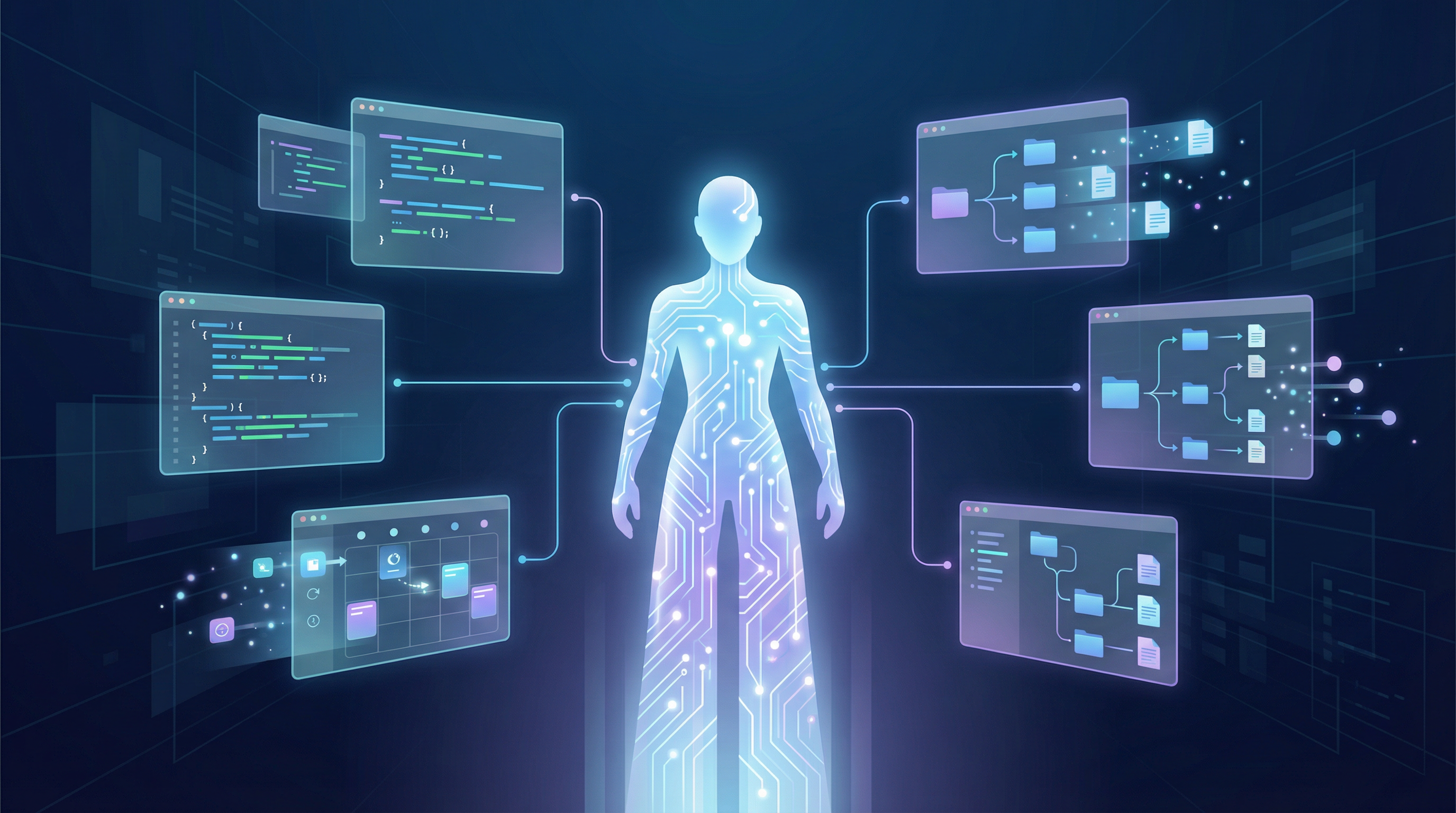
For the past year, the world has been captivated by the power of large language models (LLMs). We’ve watched them write poetry, generate code, and answer questions with uncanny fluency. But for all their impressive capabilities, we’ve mostly interacted with them through a simple chat interface. We prompt, they respond. It’s a powerful paradigm, but it’s also a limited one.
I believe 2026 marks the beginning of a fundamental shift in how we interact with AI — a move away from the passive chatbot and toward the proactive, autonomous AI agent. This isn’t just a prediction; it’s a change I’ve started to experience firsthand. And like any significant technological leap, it’s been a mix of the magical, the clunky, and the profoundly promising.
My Clunky, Magical Weekend with OpenClaw
Over the weekend, I decided to dive into the world of self-hosted AI agents by installing OpenClaw, the open-source project that has been generating a massive amount of buzz. Originally known as ClawdBot, this tool has rapidly evolved, capturing the imagination of developers with its promise of an AI that “actually does things.”
My initial experience was, to be blunt, clunky. The Docker setup was mostly broken, and it took some wrangling with a Linux environment to get it running. It’s a far cry from a polished, consumer-ready product. But once it was working, I saw the magic. The ability to simply ask an AI to perform multi-step tasks on my own machine — to read files, execute commands, and interact with the web without me holding its hand at every step — felt like a monumental leap.
What struck me most was the sheer potential. Here was a tool, built by a small community and only a few weeks old, that could orchestrate complex workflows on my behalf. It’s shocking, in a way, that we haven’t seen a similar experience from the tech giants who already have so much of our data and context. Why can’t my Google Assistant, with its deep knowledge of my calendar, emails, and habits, do what OpenClaw is attempting?
The answer, I think, lies in the open-source community that has sprung up around OpenClaw. In just a few weeks, a repository of over 1,700 community-built “skills” has emerged, offering automations for everything from managing a smart home with IoT devices to controlling Winamp. There are skills for fetching and summarizing tech news, triaging GitHub issues, and even programmatically creating videos with Remotion. This explosion of creativity is a testament to the power of open, extensible systems.
From Chatbots to Agents: A Necessary Evolution
My experience with OpenClaw crystallized a feeling that has been growing for a while: the chatbot is not the endgame. As Mitchell Hashimoto, the creator of Vagrant and Terraform, recently wrote in his excellent post, “My AI Adoption Journey,” to find real value in AI for complex work, you must move beyond the chat interface and embrace the agent.
Hashimoto’s journey from AI skeptic to daily agent user is a must-read for any developer. He outlines a six-step process that involves dropping the chatbot for meaningful work, reproducing your own work with agents to build expertise, and eventually outsourcing high-confidence tasks to agents running in the background. His core insight is that agents, unlike chatbots, can interact with the world. They can read files, execute programs, and make HTTP requests — the fundamental building blocks of any real-world task.
This is the key difference. A chatbot is a conversational partner; an AI agent is a digital employee. It can work autonomously, in parallel, and even while you sleep.
The Polished Future: My Experience with Manus
While OpenClaw represents the raw, community-driven frontier of agentic AI, platforms like Manus show us what a more polished, integrated experience can look like. My “aha” moment with Manus came when I discovered its ability to schedule tasks using natural language. I could simply tell it, “run this research task every Friday at 8 AM,” and it would set up the equivalent of a cron job. This seemingly simple feature is a game-changer. It transforms the AI from a one-off tool into a persistent, reliable assistant.
Of course, no tool is perfect. While the scheduling is powerful, I’m eager to see more robust error handling and dependency management for these scheduled tasks in future updates. But this is exactly the point: we are now discussing feature requests for autonomous agents, not just prompt techniques for chatbots.
This is the future that Goldman Sachs CIO Marco Argenti predicted when he said that 2026 would be an even bigger year for change than 2025. He argues that AI models are becoming the new operating systems, and that we are moving toward an “agent-as-a-service” economy where companies deploy “human-orchestrated fleets of specialized multi-agent teams.”
The Questions We Should Be Asking
We are at the very beginning of this agentic shift. The tools are still early, the workflows are still being defined, and the security implications are still being understood. But the trajectory is clear. The conversation is moving from what AI can say to what AI can do.
Whether it’s the grassroots energy of OpenClaw or the enterprise-ready power of Manus, the message is the same: the era of the passive chatbot is ending. The year of the proactive, autonomous AI agent has begun. And for developers and tech-savvy professionals, the opportunity to build, automate, and create with these new tools is immense.
But as we build, we need to ask the right questions:
- What’s the one tedious task you’d outsource to an AI agent tomorrow?
- Are we prepared for the security and privacy challenges of agents with persistent memory and full system access?
- Which will win out: the polished, walled-garden agents from big tech, or the chaotic, open-source bazaar of tools like OpenClaw?
It’s going to be a wild ride. I, for one, can’t wait to see what we build.